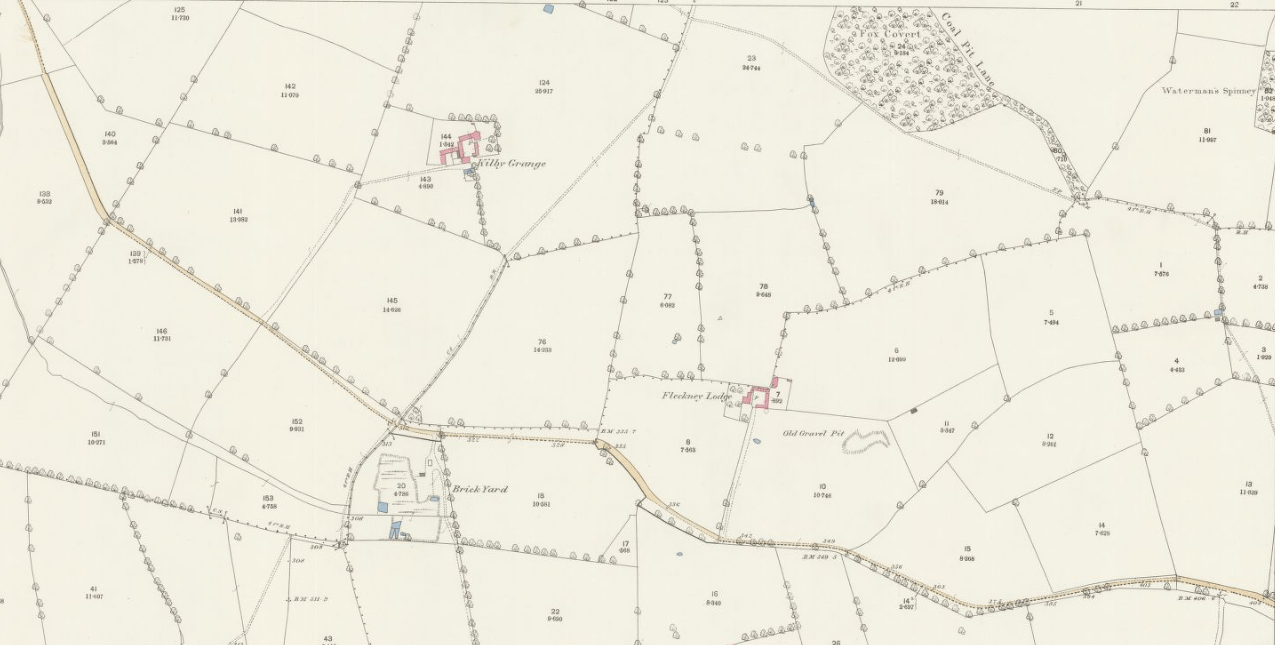
Are ‘anomalies’ in parish boundaries a key to see into places of significance in long disappeared early medieval landscapes? I believe they are. We live in a causal universe; there’s a reason why this boundary is here and not there – my thesis is that when the parish boundaries were laid out in a world without maps they moved between points of significance; a stream, a stone, a bridge, a ridge, a summit, a ford. Points on the boundary were carefully selected to be memorable places for those that followed, ‘beating the bounds‘ for countless generations.
We’d expect a landmark to act as an anchor for a parish boundary – four parishes meet along the ridge of the Langton Caudle, for example. But human geography seems to be as important as physical geography; I’ve spotted a number of places in the route of a parish boundary where there’s a short, sharp, sudden change of direction – sometimes only a few steps – before reverting to the general route. These anomalies seem to lie on the tracks of Roman roads, suggesting the road was visible in the early medieval landscape when parish boundaries were formalised.
 A Walk Through Leicestershire